
Over the last few years, I have had an extended back-and-forth conversation with a Roman Catholic on Twitter. This was before I was banned from Twitter for no reason at all. I’ve been wanting to respond for some time, but I have no choice except to do it here. Thanks to rampant censorship, I won’t be able to interact with him directly, but at least I’ll be able to respond.
This is Part 2.
I’m not sure how the bread of God=the flesh of Christ is a denial of the trinity. If Christ is God, it makes sense to call his flesh the bread of God. St. Ignatius also calls Christ God elsewhere, so he wouldn’t be changing his terminology.
Admittedly, the doctrine of the trinity irrational—that is, officially, inaccessible to reason alone—so I don’t expect a Catholic to recognize a problem here. When you’ve dogmatically rejected subjecting your beliefs to reason, you lose the ability to identify when your beliefs are irrational. That’s simply a fact: an irrational belief is intellectually indistinguishable from a ‘true’ divine mystery.
But, make no mistake, if CE is correct in his exegesis (spoiler: he isn’t), then this claim—”the bread of God is the flesh of Jesus”—must be understood unambiguously as a non-trinitarian formulation.
In the doctrine of the Trinity, ‘God’ is an overloaded term. It can refer either to the Father or to the Trinity as one whole nature or essence. Formally, ‘God’ never refers to the person of Jesus, instead it normally refers to God’s essence or nature, to the Trinity itself. Regardless, the term ‘God’ always includes the Father. Thus, we can say God had a Son (the first case), or speak of “God [the Trinity]” (the first case), or say that Jesus is God (the second case), or speak of “God [the Father]” (the second case).
Notice that we never say that God is Jesus, we only say that Jesus is God. To say that “God is Jesus” is to collapse the firm distinction between persons and essence, which is one of the well-known heretical formulations. This is why, for example, …
St. Ignatius also calls Christ God elsewhere
…Ignatius never calls God Christ. Yet, this is precisely that which is required to assert that Ignatius thought “Bread of God” was equivalent to “flesh of Christ.” The evidence CE requires is missing. Regardless of whether or not Ignatius calls Christ ‘God’ elsewhere (the textual evidence is unclear), this isn’t affirmative evidence that “Bread of God” refers to the flesh of Jesus.
This is important. Neither the person of the Father had flesh (only the person of Jesus did), nor did the nature or essence of God have flesh (this is nonsensical; a category error). Only Jesus had flesh. Jesus (the person) was God (the nature), but the flesh was not (of essence) divine and the flesh was not (of essence) God. Indeed, the human nature is categorically distinct from the divine nature. That’s the whole point of the doctrine of the incarnation: Jesus’ human nature is distinct from his divine nature.
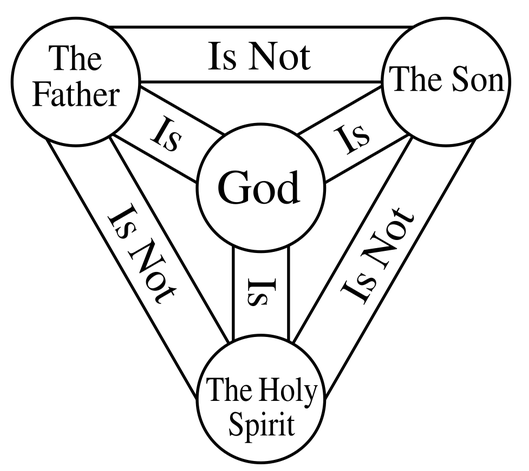
When we say that “Jesus is God” what we are saying is “Jesus (the person) is God (the nature or essence).” This is not a reversible proposition. It can be said that Jesus is a person of the Trinity, but not that Jesus is the Trinity. The latter is nonsensical, as the Trinity, by definition, is all three persons, not just one. In the Trinity, only the persons are distinct. So we can say that Jesus is God, but not that God (i.e. the Trinity) is Jesus.
Christians rarely say “God [the nature or essence] is Jesus [the person],” they say “Jesus [the person] is God [the nature].” The former is erroneous. This is why Ignatius calling Jesus ‘God’ does not—and cannot—mean that the “Bread of God” is the flesh of Jesus.
Ignatius would have had to say “The Bread of the Son” if what he meant was the flesh of Jesus. The “Bread of God [the nature]” and the “Bread of the Son [the person]” are simply not interchangeable. Only the latter could possibly refer to Jesus’ incarnated flesh.
The point here is that for Ignatius to speak of the “Bread of God” without denying the Trinity, he had to be speaking figuratively of something other than the literal flesh of Jesus. Consequently, CE’s argument simply does not logically follow.
All of this is logically sound. We could stop here if we wanted to. But, we can also exegete what Ignatius actually said and be forced to arrive at the same conclusion. Let’s start with the first mention:
I write to the Churches, and impress on them all, that I shall willingly die for God , unless you hinder me. I beseech of you not to show an unseasonable good-will towards me. Allow me to become food for the wild beasts , through whose instrumentality it will be granted me to attain to God. I am the wheat of God, and let me be ground by the teeth of the wild beasts, that I may be found the pure bread of Christ . Rather entice the wild beasts, that they may become my tomb, and may leave nothing of my body; so that when I have fallen asleep [in death], I may be no trouble to any one. Then shall I truly be a disciple of Christ, when the world shall not see so much as my body. Entreat Christ for me, that by these instruments I may be found a sacrifice [to God].
I do not, as Peter and Paul, issue commandments unto you. They were apostles; I am but a condemned man: they were free, while I am, even until now, a servant. But when I suffer, I shall be the freed-man of Jesus, and shall rise again emancipated in Him . And now, being a prisoner, I learn not to desire anything worldly or vain.
That Ignatius is speaking figuratively is unambiguous. It strains the imagination to try to fit “the flesh of Jesus” into “food for wild beasts,” “the wheat of God,” or “the pure bread of Christ” when Ignatius is clearly talking about being slain as a martyr.
Ignatius wants the prison of his material flesh to be destroyed utterly, so that he is “emancipated” and what is left of himself is the “pure bread of Christ.” He is speaking, using heavily figurative language, of the resurrection.
Recall how, above, I said:
Here, in Chapter 4, he said “the pure bread of Christ.” But, it is critical to note that when Ignatius becomes “the pure bread of Christ” it is at the resurrection after Ignatius’ material flesh is gone. The “bread of Christ” cannot possibly refer to material, natural flesh. The whole point of this colorful depiction is that the material is utterly gone, having been sacrificed and consumed until nothing remained.
No one reading this neutrally would assume that Ignatius had the literal natural human flesh of Jesus in mind. No one. This is an utterly alien concept that reveals precisely how insidious eisegetical assumptions are.
Now, let’s move to the contested portion:
Let’s review what we concluded above:
As in Chapter 4, we see here in Chapter 7 that Ignatius is again speaking figuratively. He even begins with a figure-of-speech by noting that “my love has been crucified.” The rest of the chapter is riddled with figures-of-speech:
- fire in me
- water that lives
- water that speaks
- heavenly bread
- bread of life
- drink of God
- [God’s] blood
- incorruptible love
- blood [is] love
- blood [is] eternal life
Ignatius is, rather obviously, making reference to the Living Water narrative in John 4 and the Bread of Life narrative in John 6, where Jesus himself first uses these figures-of-speech as figures-of-speech. It is where Jesus explicitly refers to his own flesh as something other than literal flesh.
Ignatius references the Gospel of John only. He does not reference any of the Last Supper narratives, making no mention of thanksgiving (that is, eucharist). This is further confirmation that he isn’t talking about the Last Supper or any kind of “Eucharistic” context.
Oh, and did you pick up on this little phrase?
I desire the bread of God, the heavenly bread, the bread of life, which is the flesh of Jesus Christ, the Son of God, who became afterwards of the seed of David and Abraham…
Ignatius is talking about the “bread of God” and the “heavenly bread” and the “bread of life” and the “flesh of Jesus Christ” as existing prior to the incarnation. How can the “flesh of Jesus Christ” be the literal human flesh of Jesus prior to him “becoming the seed of David and Abraham” in the incarnation? Obviously, this is referring figuratively to something else.
Unless you’ve been trapped in a Catholic framing, it is not a difficult challenge at all to know what Ignatius is figuratively referring to: it is explained by Jesus in the passages in John that Ignatius references. The heavenly bread—the flesh of Jesus—is (figuratively) the words and teachings of God, the object of belief.
Now, above we noted if “Bread of God” refers to the flesh of Jesus, Ignatius is denying the Trinity. The same thing applies here:
I desire the drink of God, namely His blood, which is incorruptible love and eternal life.
Ignatius explicitly calls the blood of Jesus the “drink of God.” When Ignatius said “Bread of God” in Chapter 7, he didn’t pair it with a reference to “bread of Jesus.” But here he equates both “Blood of Jesus” and “drink of God.” If this refers to the literal blood of Jesus, then Ignatius’ denial of the Trinity is completely unambiguous, for the reasons stated above.
It would be a great challenge, anyway, to take the drink of God as Jesus’ literal blood, since the blood is explicitly identified by Ignatius, not as a literal blood, but figuratively as “incorruptible love” and “eternal life.” And, I would be remiss if I failed to mention that calling Jesus’ blood ‘love incorruptible’ is (if literal) a straightforward Gnostic-style heresy and (if non-literal) proves that Christ’s blood is meant figuratively.
Of course, I can’t be dogmatic about whether “bread of God” was literal or figurative. Maybe Ignatius was speaking figuratively. The evidence of that is overwhelming. But, maybe, just maybe, despite all the evidence to the contrary, Ignatius really wasn’t speaking figuratively and so really did deny the Trinity. I can’t, logically, reject the notion that he was a unitarian or held to some other non-incarnational Christology.
In short, you have to conclude that when Ignatius spoke of the “Bread of God,” he (1) wasn’t referring to the literal flesh of Jesus and/or (2) he was denying the Trinity (or incarnation). You don’t have to pick both options, but you do have to pick one of them. Thus, CE’s explanation is logically excluded and Ignatius did not believe in transubstantiation.